Turkish Ready-to-Wear Exports Will Reach $17 Billion
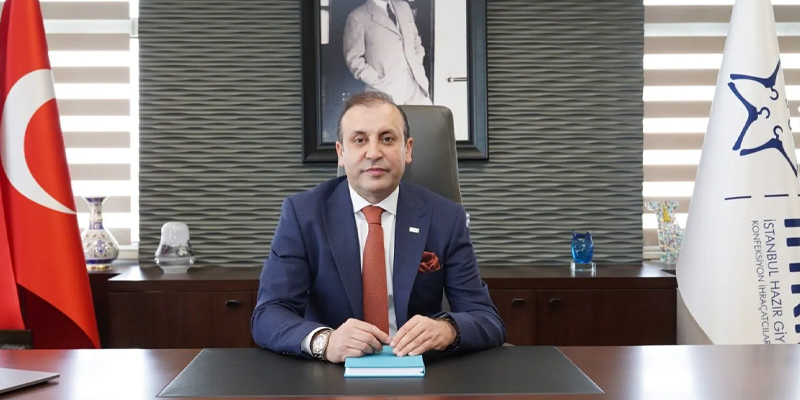
Mustafa Paşahan, Chairman of the Istanbul Apparel Exporters’ Association (İHKİB), said the Turkish apparel industry expects to close this year with exports of approximately $17 billion.
According to data compiled by Anadolu Agency (AA) from the Turkish Exporters Assembly (TİM), Türkiye recorded exports worth $24.94 billion in June. During the same month, exports from the apparel and clothing industry increased by 15.1% year-on-year to $1.376 billion, accounting for 6.3% of the country’s total exports.
 During the January–June period, the sector generated $7.98 billion in exports, representing a 1.6% decline compared to the same period last year. Speaking to Anadolu Agency (AA), Paşahan said he remains optimistic about export growth, expecting orders to gain momentum in the second half of the year.
Paşahan stated that the industry is expected to close the year with exports of around $17 billion, adding: “If our expectations regarding demand are met, we can achieve stronger export performance in 2027 and once again exceed $18.5 billion in exports.”
Pointing out that the apparel industry ranks as Türkiye’s third-highest sector in terms of export value per kilogram, after the jewelry and defense industries, Paşahan noted that while Türkiye’s average export value is around $1.5 per kilogram, the apparel sector’s average reaches $18 per kilogram.
Regarding next year’s target, he said: “In line with the growth of our branded exports, we aim to increase our export value per kilogram by 10%.”
Emphasizing that the apparel industry is predominantly export-oriented, Paşahan recalled that the sector achieved its highest annual export value in 2022, reaching $21.2 billion, but has recently faced competitiveness challenges.
Recalling that the industry generated approximately US$8 billion in exports during the first half of this year, Paşahan said: “We are a sector that generates a foreign trade surplus. Despite our exports declining continuously for the past three years, we recorded a foreign trade surplus of more than $12 billion in 2025. In other words, we generated more than $12 billion in net foreign currency earnings for our country last year.”
“We Will Be the Address for Affordable Luxury, Speed and Quality”
Paşahan stated that the apparel and clothing industry is among Türkiye’s strategic industries thanks to its value-added production, employment, and exports: “According to April 2026 data, we produce with more than 502,000 employees across approximately 35,000 companies. We have long been Europe’s third-largest supplier and currently rank as the world’s sixth-largest supplier.”
Although the industry has faced increasing challenges in price-based competition in recent years, Paşahan said Türkiye continues to differentiate itself through its quality, design capabilities, compliance with social standards, and sustainability performance. He added: “Türkiye is no longer a low-cost manufacturing country. We cannot compete with Asian countries on the basis of cheap labor. We will win the game not through price, but through value. We will become the address for affordable luxury, speed, and quality. Our apparel brands meet consumers through thousands of stores and sales points in more than 100 countries. Some of our brands are market leaders in the countries where they operate. We believe Türkiye has now reached the stage where it can create globally recognized fashion brands. With this vision, we established the Branding Committee within İHKİB. Our committee will strengthen the global perception of ‘Turkish Apparel’ and bring our brands to the international stage through more aggressive promotion and communication, as well as direct engagement with global buyers.”
“Green Transformation, Sustainable Manufacturing and Digital Transformation Are Strengthening Our Competitiveness”
Paşahan said that globally renowned brands prefer Türkiye because of its speed, adaptability, flexible manufacturing capability, ability to respond quickly to small-volume orders, and strong logistics infrastructure.
Noting that nearshoring is becoming increasingly important in global supply chains, he said: “Our geographical proximity to Europe minimizes both inventory costs and the risk of products remaining on shelves for global brands. Furthermore, Türkiye’s integrated manufacturing structure covering every stage from cotton to finished garments, its ability to produce complex designs, and its pioneering steps in green transformation, sustainable manufacturing, and digital transformation further strengthen our competitiveness in global markets.”
Paşahan also noted that, according to data from the Ministry of Industry and Technology, the textile and apparel sector currently has 77 R&D centers and 60 design centers. In addition, he said that thousands of capable manufacturers, although not officially designated as design centers, contribute significantly to the industry’s strength through their in-house design teams and sample rooms, producing tailor-made collections and patterns for global brands every season.
Commenting on the sourcing preferences of international brands, Paşahan said: “Global brands no longer prefer manufacturers that only provide contract sewing services. Instead, they choose companies that analyze global fashion trends, develop their own collections, utilize modern technologies such as 3D design, and offer complete full-package production solutions from design to finished product.”
“We Can Take the Industry to a Completely Different Level by 2030”
Paşahan acknowledged that the industry continues to face competitiveness challenges. He stated that, in order to reduce production costs, apparel investments throughout Türkiye should benefit from Region 6 investment incentives for a period of three years. He also called for a 10-year extension of incentive certificates that have expired or are about to expire in the designated incentive regions.
He added that lowering social security premium costs and increasing existing government support measures would also benefit the industry, concluding: “If the expectations and demands of our industry are met, we can achieve a rapid recovery in 2027 and take the sector to a completely different level by 2030.”