The Leather Sector Has Put Kemalpaşa and Çiğli on Its Radar for an Organized Industrial Zone
Efforts in İzmir to establish a leather products-focused Organized Industrial Zone (OIZ) covering the footwear, leather apparel and saddlery sectors have once again come to the agenda. Sector representatives state that the search for a suitable location is ongoing within the framework of a model based on non-tanning production, and that the Kemalpaşa and Çiğli corridor is among the areas being evaluated.
The initiative to establish a leather products-focused Organized Industrial Zone in İzmir that will bring together the footwear, leather apparel and saddlery sectors under one roof has resurfaced. Representatives of the Aegean leather industry note that they are continuing their search for a location for a new OIZ model that covers final product manufacturing rather than tanning activities, and that the Kemalpaşa and Çiğli corridor is among the regions under consideration.
Within the scope of the project, which aims to eliminate the fragmented structure of the sector, the objectives include developing the sub-industry, training a qualified workforce, establishing a vocational education infrastructure and implementing environmentally friendly production models. Sector representatives emphasize that once the OIZ is realized, İzmir’s competitiveness in leather products manufacturing will increase.
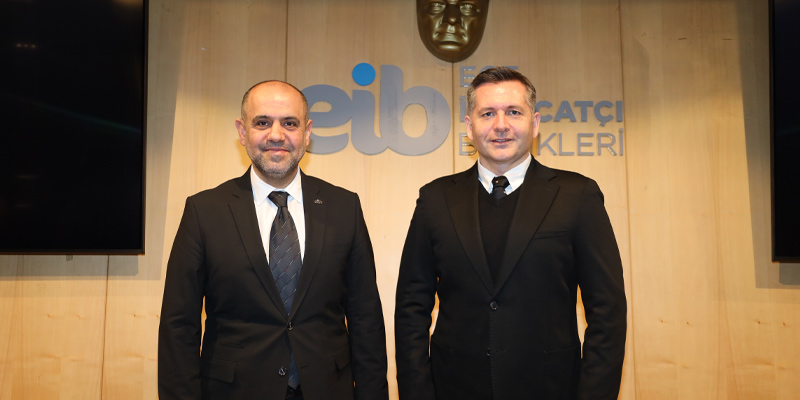
Halil Gündoğdu, Vice Chairman of the Board of Directors of the Aegean Leather and Leather Products Exporters’ Association, stated that when a Leather OIZ is mentioned, tanning is usually the first thing that comes to mind; however, there is a need for an Organized Industrial Zone that encompasses all sub-sectors and includes the sub-industry as well.
“We have three main sub-sectors: footwear, leather apparel and saddlery. Our goal is to establish an organized industrial zone that brings together all of these sub-sectors and their sub-industries under the same roof. The production carried out here will not be tanning; it will involve cutting, stitching and transforming tanned ready leather into final products. Therefore, there will be no chemical waste, and we will not require facilities such as a wastewater treatment plant. Our primary priority is to provide a permanent solution to the qualified labor shortage in leather products, which is a labor-intensive sector. In this context, we plan to establish a sector-specific vocational high school within the OIZ. Through clustering, labor flexibility will increase and the sub-industry will develop in line with the needs of the sector. At the same time, green production, energy efficiency, the use of solar energy and international certification processes can be implemented much more easily within this structure. It is not possible to achieve a transformation of this scale and standard without moving away from the current fragmented structure.” he said.
Gündoğdu also stated that the search for a location for the Leather Products OIZ is ongoing:
“As a sector, we do not yet have a finalized location. There are regions with which we are holding discussions. It is observed that İzmir’s industrial development axis is shifting predominantly toward the north. The Çiğli, Menemen and Aliağa corridor stands out as more suitable for industry due to its limited agricultural and livestock activities. However, the sector prefers locations closer to existing centers where production can continue without dividing the current workforce. In this framework, Kemalpaşa and Çiğli and their surroundings are currently the two main regions on our radar. The establishment processes of organized industrial zones are not completed in the short term. As of 2026, having the location finalized would be an important achievement for us.” he said.
“A New-Generation Industrial Zone Has Become a Necessity for the Sector”
Erkan Zandar, Chairman of the Aegean Leather and Leather Products Exporters’ Association, stated that an OIZ that brings the sector together in a single center should be addressed not only spatially but also in terms of employment and education. Emphasizing that vocational education should be strengthened through an on-site training approach rather than the classical high school model, he said:
“Today, it is becoming increasingly difficult to direct 14–15-year-old young people to vocational high schools. In contrast, practical training provided within factories to individuals aged 30–40 and above who do not have a specific profession yields much more effective results. There are successful examples of this in Italy. The physical and infrastructural conditions of existing footwear sites no longer meet today’s needs. A new-generation industrial area that is easily accessible, has strong infrastructure, includes social facilities, supports female employment and integrates vocational training has now become a necessity for the sector.”