A Color Revolution In Yarn: Raw-Material-Based Sequential Production Technology From Mutlu İplik
Mutlu İplik is opening a new chapter in the yarn industry with its proprietary production technology that enables two different raw materials, such as cotton and polyester, or two different colors to be combined within a single yarn structure in a controlled manner and at customizable lengths and intervals. This innovative approach offers significant advantages in both design and production processes, particularly for weaving and embroidery applications.
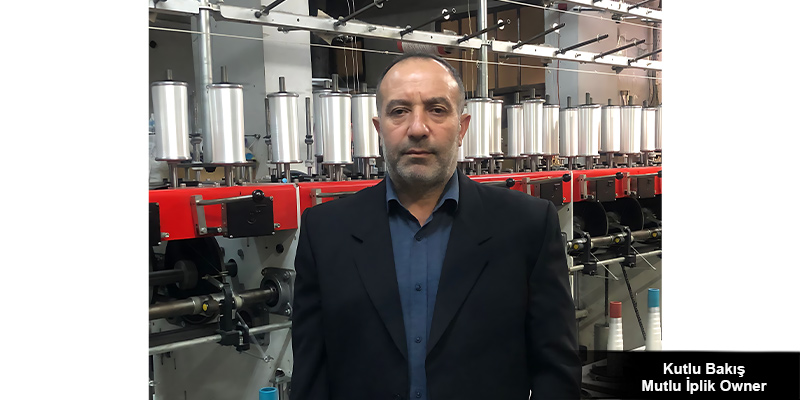
Rising aesthetic expectations, the demand for functionality, and the need for higher efficiency in production are making innovative solutions in yarn technologies indispensable for the textile industry. Operating in Bursa, Mutlu İplik responds strongly to these needs with its raw-material-based sequential yarn production technology. By enabling two different raw materials or two different colors to be produced within a single yarn in desired sequences and intervals, this technology redefines the conventional boundaries of production in the weaving and embroidery sectors. In our interview conducted for Tekstil Teknoloji magazine with Mutlu İplik Owner Kutlu Bakış, we discuss the advantages this innovative technology offers to the industry and the company’s production vision.
Could you briefly describe the establishment of Mutlu İplik and the level of production and technology the company has reached today? Could you also provide information about your facility size, workforce and machinery park?
 Mutlu İplik was founded in 2003 by our founder Mutlu Bakış at our current location in Yıldırım, Bursa. Producing our own yarn machines during the initial establishment phase formed the foundation of our company’s technical infrastructure. Over time, in line with increasing demand, we expanded our production capacity by developing our machinery park with both domestic and imported machines. Today, we operate in a 1,000 m² indoor facility with 14 employees working in three shifts. With a daily production capacity of approximately 500 kg, we manufacture high-tenacity industrial yarns for roller blinds, embroidery and cord yarns for tulle curtain and weaving sectors, as well as fringe yarns for the apparel and curtain industries. Although we do not export directly, our products are used in international markets through our customers. We continuously follow new technologies and continue to develop our machinery park and production infrastructure.
What do you see as the most significant transformation in the yarn industry in recent years, and how has this transformation affected Mutlu İplik?
One of the most significant transformations in the yarn industry in recent years has been the rapid expansion of industrial and technical yarn applications. Especially in home textiles, practical, functional and user-friendly solutions are coming to the forefront. Pastel colors, minimalist designs and easy-to-use mechanical curtain systems are clear examples of this change. With new-generation technologies, high-strength, application-specific yarn solutions have become a key competitive factor. As Mutlu İplik, we are adapting to this transformation by expanding our product range and developing value-added yarns for different application areas.
“DIPPING AND JET DYEING METHODS ARE INSUFFICIENT IN TERMS OF BOTH COST AND QUALITY”
How did the idea of raw-material-based sequential yarn production emerge? What was the main need that led you to develop this technology? How would you define the key differences between this method and traditional yarn production processes?
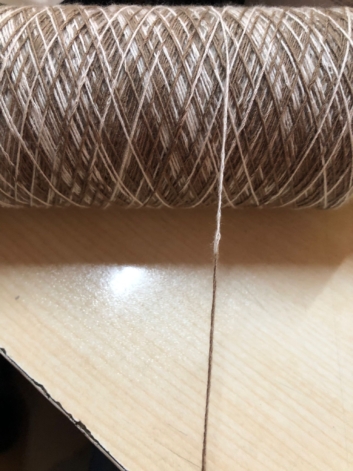
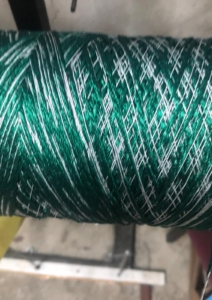
The idea of producing yarns with sequential, colored and sharp color transitions directly from raw materials emerged from the need for clear and consistent color transitions, especially in embroidery and decorative textile applications. Traditional dipping and jet dyeing methods were insufficient to meet this demand in terms of both cost and quality. The technology we developed enables yarns to be produced with sequential and controlled color transitions directly from raw materials. This eliminates the need for post-dyeing processes, offering a production model that is more cost-effective, more efficient and ensures consistent quality.
Which machines, equipment or software solutions play a critical role in this new production technique? How are fiber placement and orientation controlled during the process?
 In this new production technique, artificial intelligence–supported next-generation machines, smart control systems, precision sensors and real-time production monitoring software play a critical role. Fiber placement and orientation are continuously monitored and automatically optimized through these systems. By analyzing production data in real time, structural integrity, color sequence and transition precision are kept within defined standards, significantly improving quality consistency, repeatability and efficiency.
What kind of improvements does this technology provide in the physical and mechanical properties of the yarn (evenness, strength, hairiness, etc.)?
This technology provides significant improvements in the physical and mechanical properties of the yarn. It enables the sequential and controlled combination of different colors and different raw materials (such as polyester–staple fiber or linen–cotton) within the same yarn. Thanks to precise control of fiber placement, these raw material combinations maintain structural integrity without causing any loss in strength, evenness or usability. Hairiness is kept to a minimum, and the resulting yarns can be used smoothly on existing machines in weaving and fringe applications.
How do you evaluate the effects of raw-material-based sequential yarn production on production efficiency, waste rates and process times?
Raw-material-based sequential yarn production provides a significant advantage by increasing production efficiency. Since the process is fully integrated into the production line, capacity increases steadily while additional processing steps are eliminated and processes are simplified. In terms of waste rates, this method does not have any negative impact. As with our other product groups, a controlled and sustainable waste rate of a maximum of 1–1.5% is achieved in sequential colored yarn production. Overall, this technology offers a strong production model both operationally and economically, with increased capacity, low waste rates and more efficient process times.
“OUR NEXT-GENERATION YARNS DELIVER HIGH PERFORMANCE IN WEAVING PROCESSES”
What kind of feedback do you receive regarding the performance of these yarns in weaving, knitting and dyeing processes? What advantages does this new production technique provide in terms of energy use, resource efficiency and sustainability?
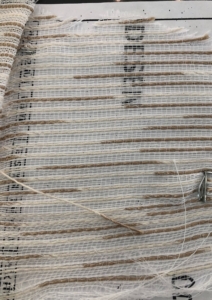 Our next-generation yarns are mainly used in curtain weaving and embroidery applications, and we receive very positive feedback from our customers, particularly regarding their high performance in weaving processes. This production technique enables stronger color transitions, depth and shadow effects in designs. Thanks to the combination of different raw materials within the same yarn, it creates a fluid and dynamic visual effect on the fabric surface. This feature provides a significant design advantage, especially in decorative curtain and embroidery applications. From a sustainability perspective, producing the yarn in color directly from raw materials largely eliminates post-dyeing processes, resulting in reduced energy, water and chemical consumption and a lower environmental impact.
In which product groups and application areas does raw-material-based sequential yarn production create higher added value? In which segments are these yarns mainly used today?
Raw-material-based sequential yarn production creates particularly high added value in curtain weaving and fringe yarn applications. In curtain weaving, it offers an important alternative for minimalist and pattern-free design trends by enabling new and distinctive visual effects without changing the weaving structure. In the fringe sector, this technology eliminates the mixed and “dirty” color transitions often encountered with traditional methods. Sharp and clean color transitions achieved using chip-dyed FDY yarns significantly enhance aesthetic quality and product standardization. By eliminating additional processes such as dipping and jet dyeing, this technology also simplifies production and provides cost advantages. Today, it is mainly used in curtain weaving and fringe product segments.
What will be the next development stage of the raw-material-based sequential yarn production technology? Do you receive any international collaboration or licensing requests for this technology?
In the next stage of development, our primary goal is to increase production capacity and make the technology applicable on a broader scale. At the same time, we are focusing on increasing the number of colors in sequential colored yarns and adjusting color transition intervals flexibly according to customer demands. In this respect, we have already implemented the most advanced stage of the technology. In line with the continuously innovation-driven nature of the yarn industry, we will continue to develop solutions aligned with changing needs and fashion trends.