
DMS Dilmenler Prepares for the Future with Technology and R&D in a Period of Slowing Investments
Interview: Dilek Hayırlı
At a time when global investment appetite is weakening, DMS Dilmenler Makina is carrying out a strong transformation process for the future through its R&D infrastructure, the on-site expertise provided by the MEGAM dyehouse, and next-generation machine solutions focused on energy efficiency.
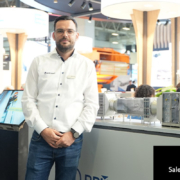
Marked by global uncertainties, shrinking investments and rising cost pressures, 2025 is bringing significant challenges for the textile machinery sector. In this demanding environment, DMS Dilmenler Makina is focusing not only on managing current conditions but also on reshaping the future with a strong emphasis on engineering, R&D and sustainability. In our interview with Dilmenler Makina General Manager İsmail Şengüler, we discussed a wide range of topics, from demand dynamics in global and local markets to the first rotary printing machines manufactured in Turkiye, from the critical role of the MEGAM dyehouse in R&D to the company’s targets for ITM 2026.
How was 2025 for DMS Dilmenler? Could you share the changes you observed in demand and expectations for dyeing and finishing machines, both in Turkiye and in export markets?
 For DMS Dilmenler, 2025 has presented a much more challenging and distinct picture compared to previous years. The contraction in global demand has significantly slowed the pace of investments in the market, creating a particularly demanding period for companies like ours that manufacture capital investment machinery. The surge in demand during the pandemic, driven by increased production capacity and a parallel rise in investment appetite, gave way to a significant contraction following the Russia-Ukraine war. Furthermore, shifts in the priorities of end-buyers and more cautious, self-protective approaches led to the postponement of investment decisions and a marked decline in demand. In addition, regional and local problems within many countries, economic uncertainties, and ongoing wars further deepened the demand contraction in the global textile market.
All these developments led to a significant loss of turnover in the sector and a drastic decrease in new investments. In the specific case of Turkey, domestic economic indicators, rising costs, and the relatively vibrant Egyptian market negatively impacted the dyeing and finishing machinery sector. During this period, companies focused on maintaining their existing capacity, continuing operations with current resources, and surviving in the market, rather than making new investments. As a result, investment appetite in the sector weakened significantly, creating a serious obstacle to new investments.
“Our Newly Developed Rotary Printing Machine Has High Potential for Creating Added Value”
How do your newly developed rotary printing machines tangibly contribute to customers’ production efficiency, quality standards, and cost optimization? What are the differentiating features of these machines in the industry?
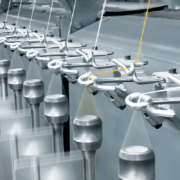
Our newly developed rotary printing machines stand out as a significant technological investment element in the sector, being the first of their kind produced in Turkiye, and possess high potential for creating added value. Although it is difficult to speak of a strong investment environment in the textile sector in the current conjuncture, printing, dyeing, and finishing processes remain an integral part of textiles and are among the promising areas open to development. Rotary printing is considered one of the most economical and efficient methods, especially in the production of long-length and standard patterned fabrics. The rotary printing machines we have developed at DMS Dilmenler stand out from existing solutions in the sector thanks to their technical features; they offer the potential to provide a more stable, controlled, and cost-effective printing process. In addition, our laser pattern making machine, developed in integration with rotary printing machines, allows for an unlimited number of pattern creation and erasing cycles within the system, under proper planning and suitable working conditions. This structure provides significant advantages in terms of both cost optimization and operational efficiency, especially by minimizing pattern consumption.
What investments has DMS Dilmenler made in R&D in recent years? What strategies do you adopt in the modernization of existing machinery and the development of new technologies?

MEGAM dyeing plant, operating within the Dilmenler group, conducts intensive and systematic work every day to improve the machines currently being produced, within a strong synergy. MEGAM dyeing plant is an extremely important center for Dilmenler in terms of monitoring market trends, understanding different fabric types and cost structures in the market, and directly observing the impact of the machines produced on the quality of these fabrics. It also plays a critical role in determining which technical improvements are needed to achieve better results.
For Dilmenler, research and development is a dynamic process with no end, actively worked on every day. Any planned or proposed innovation or improvement is first tested at the MEGAM dyeing plant within a suitable timeframe; the results are analyzed in detail, and the benefits are clearly demonstrated. If these evaluations show a positive cost-benefit balance, these applications are then incorporated as standard practices in machine production processes. For a machine manufacturer, possessing such a test and application laboratory is an extremely valuable advantage and one of the most important pillars of development.
What tangible advantages do your energy-saving and environmentally friendly production-focused solutions provide to your customers in their production processes? Can you give examples of your innovations in this area?
Our energy-saving and environmentally friendly production-focused solutions provide our customers with lower energy consumption, more stable processes, and more predictable operating costs. Improvements, particularly in energy-intensive processes, reduce consumption per unit of production while maintaining consistent product quality. In this context, we develop optimized heat management systems, high-efficiency drive units, and automation-supported process control solutions. In our new generation machines, energy recovery, systems that operate according to demand, and software that minimizes operator error reduce both the carbon footprint and significantly shorten maintenance and downtime. This approach provides our customers with not only environmental benefits but also a strong competitive advantage.
In line with your goal of expanding into new markets, what strategies are you implementing, particularly in Bangladesh, China, India, Mexico, and the USA? What value propositions do you offer in these markets that differentiate you from other manufacturers?
In line with our goal of expanding into new markets, we are implementing strategies tailored to local needs in markets with diverse dynamics such as Bangladesh, China, India, Mexico, and the USA, instead of a uniform sales model. Our priority in these countries is to establish a sustainable presence through strong local business partners, rapid technical support, and an on-site engineering approach. In high-volume production markets like Bangladesh and India, energy efficiency, low operating costs, and process stability are paramount; while in China and the USA, there is a greater demand for automation levels, digital integration, and quality standardization. In Mexico, flexible production and fast delivery capabilities play a critical role due to proximity to the US market. Our most important value proposition that differentiates us from other manufacturers in these markets is our ability to offer customized engineering solutions, reliable domestic production quality, and strong after-sales technical support. At Dilmenler Makina, we aim not only to be a machine supplier but also a long-term solution partner in our customers’ production processes.
How do MEGAM Dyeing Plant and your engineering training programs contribute to the development of the next generation of technicians and technologists in the industry? What is the impact of these trainings on machine performance and customer satisfaction?
Training personnel is crucial for the correct and efficient use of machinery, ensuring its presentation and operation at the highest level. The MEGAM dyeing plant also serves this purpose. Engineers and technicians hired by our company spend a significant portion of their orientation training working with machinery and participating in research and development activities at the MEGAM dyeing plant. This allows technical teams to learn the operating principles of the machines through field experience and reinforce the strategies needed for efficient use through direct practice. This approach, developed to ensure the highest efficiency in machine operation, is implemented both within the company and communicated to customers through these teams.
“At ITM 2026, We will Highlight Our New Solutions That Offer Enhanced Energy Efficiency and Digital Traceability”
How are your preparations for ITM 2026 progressing? What new products or technological solutions do you plan to showcase at the exhibition?
Our preparations for the ITM 2026 are progressing with a structure that clearly reflects Dilmenler Makina’s technology and engineering vision. This year, we see the fair not just as a platform for exhibiting products, but as a showcase where we will directly demonstrate our approach to efficiency, sustainability, and process control. Within the scope of the fair, we plan to highlight our new solutions for dyeing, finishing, and continuous lines, which offer increased energy efficiency, enhanced automation levels, and digital traceability. Systems that provide more stable production with lower resource consumption, short setup times, and technologies that reduce operator dependence are among our priority topics. Our goal at ITM 2026 is to offer visitors not only new machines, but also integrated production solutions that will make a difference in today’s competitive environment, and to further advance Dilmenler Makina’s position in the sector.
“Our Focus is on Providing Our Customers with Flexible and Reliable Machine Solutions”
Looking ahead to 2025, what are your priorities in terms of new product development, investment, and R&D projects? What innovations do you aim to introduce to the industry in dyeing, finishing, printing machines, and continuous lines?
For the period 2025 and beyond, Dilmenler Makina is shaping its new product development, investment, and R&D priorities around energy efficiency, process control, and sustainable production. Our focus is on providing flexible and reliable machine solutions that can simultaneously manage both the quality expectations and increasing cost pressures of our customers. In dyeing and finishing machines, we are working on advanced flow and heat management systems that provide more homogeneous processes, and automation solutions that reduce chemical and water consumption. Especially in continuous lines, we aim to implement digital control infrastructures that collect data throughout the line and allow for real-time process optimization. On the printing machine side, modular designs that provide shorter setup times, lower waste rates, and high repeatability are coming to the forefront. This enables quick switching between different production recipes while significantly increasing operational efficiency. Our general approach is to consider technology investments not only on a machine basis but also in terms of line efficiency and overall production performance. In this direction, we aim to provide the sector with solutions that produce higher added value with lower resource consumption through the innovations we develop.