
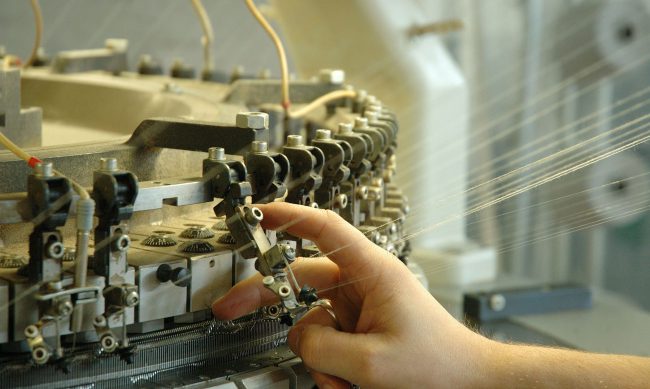
Turkey Ranks Among Top Exporters of Knitted Fabrics
Seizing an important place in the textile industry with its export performance in recent years, Turkey is one of the largest exporters of knitted fabrics as well as woven fabric in the world.
In the period until the first half of this year, weaving and yarn exports are followed by knitting exports. Accounting for 15.2% of total textile and raw material exports, knitted fabrics witnessed 660.9 million dollars of exports in the January-June period. In June 2019, exports increased by 4.7% to USD 148.2 million.
In the exports of knitted fabrics on the basis of sub-product groups for the first half of 2019, it is observed that knitted fabrics have been the most important sub-product group including elastometric or rubber yarn with an export value of 350.8 million dollars. The share of this product group in the total export of knitted fabrics in Turkey has reached 53.1%.
Italy has been the largest importer of knitted fabrics from Turkey.
The most important country in the export of knitted fabrics in the period between January and June 2019 has been Italy with exports up to 99 million dollars. Other important countries in knitted fabric exports in this period were Bulgaria, Belarus and Egypt. In the same period, Kyrgyzstan increased its exports by 484.8%.
As for the EU countries (28), which have a 53.3% share in knitted fabric exports, the exports decreased by 7.4% in the first six months of this year to 352.5 million dollars and in June 2019 by 4% to 78.2 million dollars.
Works are underway for the growth of knitted fabric market worldwide
Knitted fabrics sales are likely to increase from approximately 49 thousand tons to reach nearly 52 thousand tons in 2019. The incremental growth of the knitted fabrics market is influenced by a variety of factors, such as positive growth prospects of the textile industry and increasing popularity of knitwear among the millennial population.
The study remains bullish on the impressive growth prospects of the knitted fabrics market, as the adoption of next-gen knitting technologies has led to enhanced business efficiency and productivity for manufacturers. Leading players are focusing on enhancing sustainability and quality of their products to increase their footprint in this highly competitive marketplace. Knitted Fabric Manufacturers Explore Export Opportunities to Complement Growing Sales in Asia Pacific.
China’s Supremacy in the Textile Industry Fosters Knitted Fabrics Market Growth in APEJ Region
According to the Fact.MR study, the Asia Pacific region excluding Japan (APEJ) held a hefty ~70% volume share in the knitted fabrics market in 2018. Knitted fabrics sales in the APEJ region are likely to reach nearly 35,000 tons by the end of 2019, which will continue to support growth of the market in the region.
China leads growth of the knitted fabrics market in the APEJ region with a whopping 61% share in the global sales of knitted fabrics. China is one of the top clothing exporters in the world, as it accounts for over one-third of the EU’s apparel and textile imports. Domestic manufacturers in China are rapidly transforming their manufacturing strategies with digitalization and automation to bolster their sales of high-quality knitting fabrics worldwide.
Developing countries in Asia-Pacific other than China are foraying into the knitted fabrics market with the rapidly escalating knitwear industry in India and Bangladesh. Furthermore, favorable regulatory frameworks, increasing competition, and low labor costs are improving the export profitability for knitted fabric businesses in India and Bangladesh.
Weft-Knitted Fabrics Account for 64% of Global Sales
The Fact.MR study predicts that the demand for weft-knitted fabrics will remain higher vis-à-vis wrap-knitted fabrics, owing to the low cost and versatility of weft-knitted fabrics. Weft-knitted fabrics need only single yarn feed, which ultimately helps end-user in the textile industry to cut down the raw material input requirements and the processing steps involved in the production of knitwear apparels. As most end-users are seeking ways to curtail economic, social, and environmental costs of their manufacturing processes, the demand for weft-knitted fabrics has remained consistently high over the period of past few years.