Zorluteks Reduced Greenhouse Gas Emissions by 47.6% in 2024
Zorlu Tekstil Group Zorluteks published its ‘2024 Sustainability Report’ in accordance with the Global Reporting Initiative (GRI), prepared under the main headings of environmental, social and governance.
According to the company statement, Zorluteks continues to expand its impact through sustainability-focused activities carried out within the framework of the Zorlu Group’s “Smart Life 2030” strategy.
Continuing its operations with its production infrastructure, brand portfolio, and sales network at its integrated home textile production facilities equipped with innovative technologies in the Lüleburgaz district of Kırklareli, the company adopts a sustainability-focused production approach and continues its efforts to leave a more livable world for future generations with the motto “Today for the Future.”
R&D Center Serves Sustainability Goals
Approximately 30% of the projects carried out at the R&D Center directly contribute to sustainability goals. The company’s investments in advanced technology and digitalization also play a role in managing its environmental impact. As part of the TUBITAK SAYEM 1832 program, the company is working to create a software infrastructure that integrates product and process data and develops artificial learning-based carbon footprint calculation and improvement scenarios.
This will allow for the digitization of waste and process data, increasing the scope and accuracy of lifecycle analyses. The company is also working to increase water recovery in washing lines and improve process efficiency and natural resource usage through digital solutions as part of the ongoing TUBITAK TEYDEB 1707 project.
The ‘B’ score achieved by the company in the areas of water, energy, waste, chemical management and biodiversity within the scope of the BEPI audit in 2024 was a concrete demonstration of its commitment to systematically improving its environmental performance. The Level 2 certificate Zorluteks received under the ZDHC Supplier to Zero program documents the steps it has taken to eliminate environmentally harmful chemicals at an international level.
“We Approached Production with a Sustainability-Centered Approach”
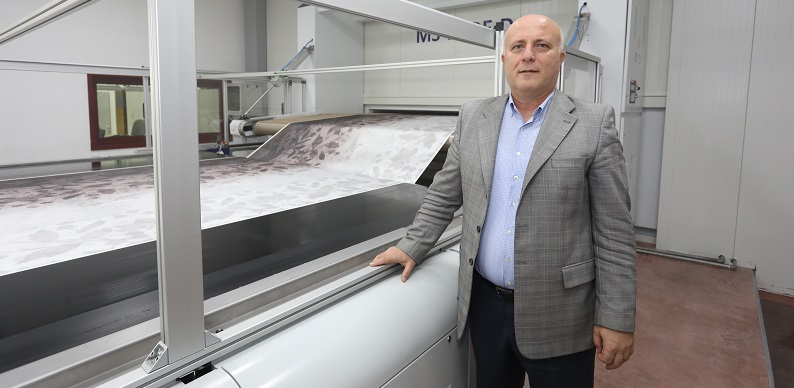
Zorluteks General Manager Cemil Çiçek, whose views were included in the statement, stated that they approach production with an approach that reduces environmental impact, prioritizes resource efficiency, and focuses on sustainability.
Çiçek stated that they continued to develop production models focused on digitalization and sustainability in line with the “Smart Life 2030” vision last year. “With the sustainable and high-performance products we developed with our R&D and design capabilities,” he said, “We’ve contributed to both the future of textiles and the transformation of various sectors. In this context, we’re creating collections featuring diverse product groups designed with an Ecodesign approach, as well as organic and recycled yarns.”
Çiçek emphasized that they brought together practices ranging from life cycle analyses to product safety with a holistic production approach in line with the ‘net zero’ target. Çiçek commented, “As we increase the share of technical textiles in our production, we also offer innovative technical textile products to various sectors beyond home textiles. We continue to inspire our industry by creating solutions that are regenerative for the planet and progressive for people.”
“We are Moving Forward with Determination Towards Our Goal of Recycling 50% of the Water We Use”
Çiçek noted that they had reduced greenhouse gas emissions by 47.6% in 2024 compared to the previous year, and noted: “We offer our sustainable product collections to consumers under the TAÇ Reborn brand. With our TAÇ Reborn Ecodesign collection, we’ve reduced our carbon footprint per product by 50%. With resource-efficient water management systems, we’re resolutely advancing toward our goal of recovering 50% of the water we use by 2030.”
Çiçek pointed out that they have achieved savings of up to 30% at high consumption points through optimization in wastewater treatment and improvements in washing lines, and emphasized that they aim to increase the share of technical textile products, which also contribute to sustainability, from one-third in their total production to over 75% in the coming period.