“2025 was a Year of Fewer but More Conscious Investments”
Interview: Dilek Hayırlı
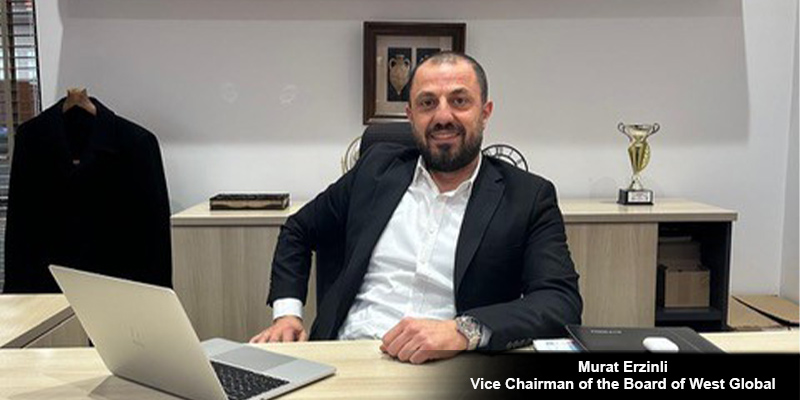
West Global Vice Chairman of the Board Murat Erzinli emphasizes that 2025 has been a period in which more cautious yet more informed investments have come to the forefront in the textile dyeing and finishing industry. With R&D efforts centered on energy and water efficiency, low liquor ratio technologies, and field-based process optimizations, West Global is strengthening its sustainable growth both in Turkiye and in its export markets.
At a time when competition in the textile dyeing and finishing industry is increasingly shifting toward technology, efficiency, and sustainability, West Global stands out with its field-driven engineering approach. In our interview with Vice Chairman of the Board Murat Erzinli, we discussed a wide range of topics—from investment trends in 2025 and expectations in export markets to next-generation low liquor ratio dyeing systems and the company’s ITM 2026 vision. Erzinli clearly outlines how West Global positions itself in the industry with its strategy of “not fast, but right growth.”
“Investments in Paint and Finishing Continued in Markets Such As Bangladesh, India, Egypt and Central Asia”
How was 2025 for your company? Could you provide an overall assessment of the demand trends, customer expectations, and investment appetite you observed in the textile dyeing and finishing sector, both in Turkiye and in export markets?
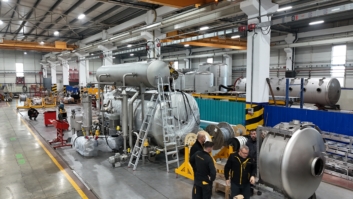
2025 was a period for West Global in which we progressed in a balanced way and positioned ourselves correctly. While investments in the Turkish market proceeded more cautiously, we clearly observed that companies were focusing particularly on areas such as energy efficiency, water conservation, and process optimization. Investments did not completely stop; however, projects with a clear return and long-term benefits came to the forefront. The picture was more dynamic in export markets. Investments in dyeing and finishing continued in markets such as Bangladesh, India, Egypt, and Central Asia. In these markets, customer expectations were shaped not only by machine price but also by factors such as process stability, sustainable performance, and after-sales support. Overall, 2025 was a year of fewer but more conscious investments.
Your company has experienced rapid growth since 2022 with a new management structure and investments. How has this transformation affected your production quality, organizational structure, and global competitiveness?
Our primary goal when launching the West Global brand was to combine our years of industry experience under a more dynamic and agile structure. Today, our entire team consists of individuals who know the field, understand the market, and come from within the industry. This structure has enabled us to create an organization that can make faster decisions and respond more effectively to customers in all processes, from production to sales. Our approach, “Our story is old, our brand is new,” is not just a slogan; it summarizes our way of doing business. While preserving our experience, we are able to adapt more flexibly and strongly to new processes and markets. This stance has contributed to building a reliable brand image both domestically and in export markets.
West Global is a company that stands out in dyeing and finishing technologies with its quality and expertise. How has the work of your R&D team in recent years been reflected in machine design and performance? In particular, what are your standout development projects for 2025?
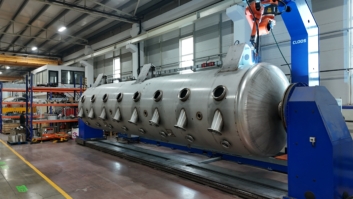
We view R&D not as a desk-based process, but as one directly driven by fieldwork. In 2025, we focused our efforts on areas that optimize energy and water usage, improve process stability, and enable more controlled results across different fabric types. Key areas highlighted included more controlled dye penetration at low liquor ratios, shorter process times through mechanical and software optimizations, structural approaches that make energy use more efficient, and control systems that reduce operator dependence. These efforts have directly and measurably impacted the performance of our machines in the field.
“Our Westair System Offers 30–35% Additional Water Savings Compared to Eco-Jet Pro”
What measurable benefits do your products, such as the Eco-Jet Pro, Westenter Ram Machine, Westdry Free Dryer, and Westair Air Dyeing Machine, offer to customers?
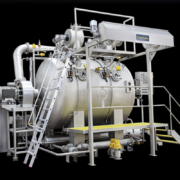
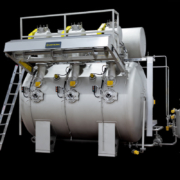
Our Eco-Jet Pro fabric dyeing machine saves 15–20% on water compared to conventional systems thanks to its low liquor ratio. It also increases production efficiency by shortening process times. Our Westair air dyeing system offers an additional 30–35% water savings compared to the Eco-Jet Pro. It ensures stable and homogeneous results, especially with innovative fabric groups, even at very low liquor ratios.
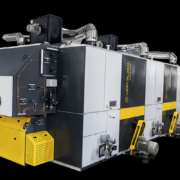
Our Westdry free-drying machines optimize drying processes while maintaining quality thanks to controlled fabric movement and balanced heat management. Our Westenter stenter machines, on the other hand, offer significant advantages in terms of process stability, uniform results, and energy efficiency during the finishing stage.
In the new generation Eco-Jet Pro and Westair systems, what approach do you take regarding low liquor, nozzle geometry, and process control?
In Eco-Jet Pro and Westair systems, our primary priority is the rapid and controlled circulation of the liquor, within the fabric. The nozzle geometries are designed to ensure even contact of the liquor with the fabric surface. In the Westair system, air-liquor interaction is controlled, resulting in stable dye penetration at much lower liquor concentrations. Advanced software and pressure control systems ensure repeatable and consistent quality in every batch.
Your company prioritizes environmentally friendly production and energy efficiency. Could you summarize your approach in this area?
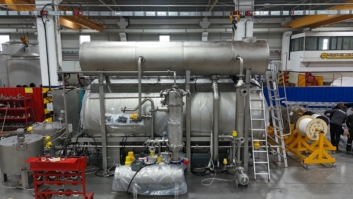 We view environmentally conscious production not merely as a regulatory requirement, but as a shared responsibility for the entire industry and the world. Therefore, when designing our new generation machines, we prioritize systems operating with low liquor optimized circulation structures, and the use of highly efficient mechanical and electrical components. Through automation and software updates, we are continuously shortening process times and reducing operator dependency. This approach yields clear and sustainable results in the field, both environmentally and economically.
“We See the ITM Exhibition As an Important Milestone in Our Journey”
As ITM 2026 approaches, what kind of preparation process is West Global undertaking? Can you give us any hints about the new products, technological innovations, or special presentations you plan to showcase at the exhibition?
We view ITM exhibitions as natural meeting points where we come together with stakeholders with whom we have been navigating the industry for years. The name West Global may be new, but the team, experience, and story behind the brand go back many years. At ITM 2026, we prioritize sharing our way of doing business, our stance, and our perspective on the field before showcasing our products. We consider this exhibition an important milestone in our journey.
What is your global growth strategy for 2026 and beyond? Are topics such as expanding into new markets, establishing distribution networks, or investing in production on your agenda?
We approach growth not with rapid growth, but with the right and sustainable steps. We prioritize becoming deeper and more permanent in existing markets. In new markets, we don’t rush; we prefer to move forward with the right representatives who truly know the market and can stand behind their work in the field. On the production side, we continue to take planned steps to maintain quality and flexibility.
What are your goals for the dyeing and finishing sector in the coming period?
The increasing competition in dyeing and finishing technologies is a continuation of a natural process we have been experiencing for many years. We aim to further strengthen our current position by closely monitoring the needs of the field in both dyeing and finishing. Our focus is on making existing machines more efficient, more stable, and more user-friendly. In terms of digitalization and automation, we continue to progress with solutions that simplify processes and reduce operator dependency.