“Our Share in World Apparel Trade Has Fallen Below 3% After 35 Years”
The Turkish ready-to-wear sector has recently begun to lose its long-held strong position in global trade. Its share of global ready-to-wear trade has fallen below 3% for the first time in 35 years, and its share of its main market, the European Union, has fallen below 5% in 30 years.
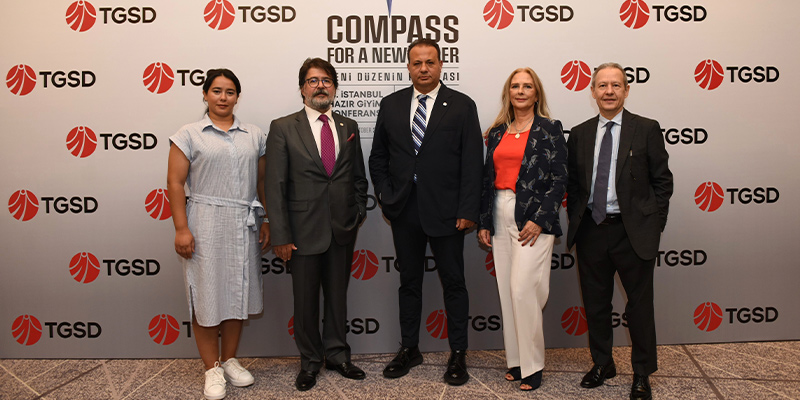
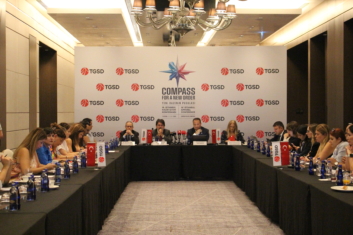 The Turkish Clothing Manufacturers’ Association (TGSD), the most inclusive non-governmental organization in the apparel sector, held a press conference ahead of the 18th Istanbul Apparel Conference to be organized in October. At the meeting attended by TGSD Presidents Toygar Narbay and Dr. Ümit Özüren and TGSD Economic Advisor Dr. Can Fuat Gürlesel, data showing that the sector has reached a historic breaking point were shared and the steps that need to be taken to regain competitiveness were emphasized.
TGSD President Toygar Narbay said, “In the first half of this year, while world apparel trade was growing, Turkiye was the only country whose exports declined. We are in a period when importing is cheaper than producing domestically, when the loss in employment cannot be stopped, and when companies have almost completely lost their equity capital. Suppose our demands, which will enable the sector to stand up again, are not met. In that case, we foresee that relocations to countries where production and competition conditions are more favorable, as well as investments already being made there, will increase further. If things go on like this, it will be our country that loses.”
“The Disinflation Program Affected Both Exports and Domestic Sales”
Reminding that while world apparel exports entered into a recovery process as of last year after the sharp decline experienced in 2023, the opposite situation was experienced in Turkiye, Narbay said, “Especially as a result of the high interest–suppressed exchange rate policy applied to fight inflation, our increasing costs caused us to lose our competitiveness. When this was added our high losses in war regions, the exports of the Turkish apparel sector started to fall increasingly.
Also in the first half of this year, while world apparel exports increased by 6% compared to the same period of last year, the share of countries we compete with such as Bangladesh, Vietnam rose over 10%, our exports decreased by 6.5%. In fact, we were the only country whose exports fell. The share of the Turkish apparel sector in the world apparel trade had first risen above 3% in 1990. Exactly 35 years later, as of June 2025, this ratio fell below it and declined to 2.96. However, in the last 15 years, the average share we had was 3.67%. Our share in the EU, our traditional and biggest market, also fell below 5% for the first time in 30 years and declined to 4.65%. On the other hand, the disinflation program also hit domestic apparel expenditures. Decreasing domestic sales, and in addition, apparel imports that increased by 25% compared to the same period of last year, are also causing us to rapidly lose our production capacit. On the other hand, according to the modeling we have done as TGSD, each 1 billion dollar loss in the sector causes 31,500 people to lose their jobs. In the first half of the year, we experienced an employment loss of 55,840 people in total, 33,724 in apparel and 22,116 in textiles. Again, in the same period, in apparel 2,527 and in textiles 496, in total of 3,023 companies closed down.”
“For Two Years We Have Been Producing at a Loss”
 Stating that in order to compensate for the loss arising from cost increases and loss of competitiveness, the sector increased prices and necessarily reduced employment, but that these were not sufficient, Narbay said, “Our sector’s costs in dollar terms increased by 25.8% in the years 2022–2025. In order to cover this loss, while a 9.6% increase was made in sales prices, employment was also necessarily reduced by 28.3%. But even these were not enough to stop the loss. According to the modeling we have done as TGSD, a company whose profitability before tax was 10.5% in 2022, made 5.6% profit in 2023, while it closed 2024 with a -5.1% loss. In February of this year, as well, we had announced our year-end projection as -4.6%. Therefore, our sector, which has been making a loss for two years in a row, will also completely lose its equity capital. Because the current monetary policies cannot create a profitability that would protect the capital of our sector. Due to high inflation and the high interest–suppressed exchange rate policy used in fighting it, we have lost our competitiveness not only from labor cost but also from financing cost. Independent from cost, while for our competitors abroad it is sufficient to protect their capital with 3.5% EBITDA, for us, the EBITDA ratio we must achieve in order to protect our capital is 17.5%,” he said.
“The Sector Has Started to Consider the Option of Investing Abroad More”
Narbay emphasized that no result was reached regarding the 10-point solution proposals they made in February for the Turkish apparel sector to recover, and especially with the sector’s share of world apparel trade falling below 3% for the first time in 35 years, a breaking point has occurred in the sector, saying, “As a result of this breaking point, as the Turkish apparel industry, we are faced with the necessity to evaluate new alternatives. Completely relocating to countries where production and competition conditions are more favorable or downsizing in Turkiye while investing in these countries, producing buyers’ orders in countries where conditions are suitable, that is, taking on the role of organizer and thereby reducing production and employment in Turkiye, have increasingly started to take place on the agenda of more and more sector players. As the public is also following, overseas investments in the sector are spreading and if things continue like this, they will spread even more. Ultimately, the country that will lose will be ours.”
“We Will Share Short and Long-Term Strategies”
TGSD President Dr. Ümit Özüren provided information about the studies carried out by the association and the 18th Istanbul Apparel Conference to be held on October 7–8. He said that they are working on a comprehensive action plan to overcome the problems experienced by the apparel sector and to increase the sector’s competitiveness. Özüren stated, “In this direction, we will publish the ‘Turkish Apparel Sector Strategy Document’ in the last quarter of this year, and the ‘HORIZON 2040 Strategic Plan’, which will create the sector’s roadmap, in the first quarter of 2026.”
“At the Conference, We Will Address the Routes the Sector Should Follow”
Explaining that they determined this year’s conference theme as “Compass for a New Order,” Özüren continued, “This compass shows us the four critical routes that should be followed in this period, namely ‘new order,’ ‘new and distant markets,’ ‘innovation,’ and ‘branding.’ Each represents the strategic focuses that will guide the future of the sector and indicates not only our direction but also how we will move forward together. On the first day of the conference, in line with this theme, many topics will be discussed together with experts and sector representatives from Turkiye and abroad, ranging from changing economic balances to deepening opportunities in markets, from production technologies to micro-export opportunities. As every year, we have also allocated the second day of the conference to bilateral business meetings (B2B) that will increase the export capacity of the apparel and textile sector. Buyer groups representing brands from all over the world, especially from Europe, leading e-commerce platforms of Turkiye, and domestic producers will communicate directly. In this context, we expect more than 1,500 meetings to take place. The situation of our sector and the difficulties experienced are evident, but despite everything, we will continue to do our best, tirelessly work to carry the Turkish apparel sector into the future, and continue to take on a guiding role as TGSD in this process.”